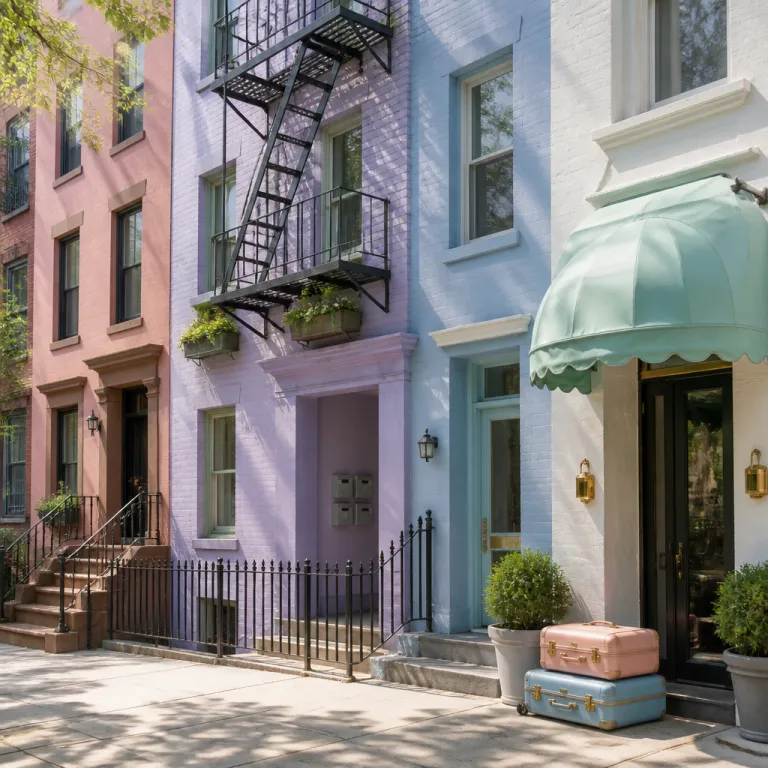
Why the average rent in Brooklyn apartments matters for hotel guests
The average rent in Brooklyn apartments quietly sets the tone for what you will pay per night in a hotel. When long term rental prices climb, hotel owners benchmark their nightly price against what a comparable apartment unit could earn in a month, which pushes up rates in step with the wider rental market. Understanding how rent and hotel prices interact in Brooklyn, New York helps you judge whether a nightly quote feels fair, inflated or genuinely competitive.
Data from rental specialists such as RentCafe, Rent.com and Leaseswap shows that the average rent for a studio apartment in Brooklyn is 3,670 dollars per month as of July 2026, the average rent for a 1 bedroom apartment is 4,087 dollars per month as of July 2026, and 2 bedroom apartments average 4,210 dollars per month as of July 2026. The relatively small gap between one and two bedroom rents reflects strong demand for compact family units, plus the fact that many larger homes sit in older or less central buildings where landlords cannot charge a steep premium. When you divide those apartment prices by roughly thirty nights, you see why a central hotel in Brooklyn Heights or near Clinton Hill can easily charge well above 200 dollars per night without seeming out of line locally. For a visitor comparing hotel offers between Brooklyn and Manhattan, this context explains why Brooklyn average nightly rates no longer feel like a bargain compared with many parts of New York City.
For someone planning a short stay, the key is to translate the average rental price into a realistic hotel budget per night. If a one bedroom apartment in a desirable Brooklyn neighborhood commands more than 4,000 dollars per month, a hotel that offers flexible terms, daily housekeeping and no long term commitment will naturally price itself higher than the simple month average divided by thirty. You should still use that month average as a ceiling reference, because when a standard room approaches the equivalent of a full one bedroom rental, it may be time to reconsider dates, neighborhoods or even a different city or accommodation style.
Reading Brooklyn’s rental market to time your hotel booking
Hotel pricing in Brooklyn follows the same seasonal rhythm as the rental market, even if the mechanics differ. Landlords adjust rent and lease incentives by month and by year, while hotel revenue managers move nightly prices daily, yet both respond to the same surges in demand around holidays, graduations and peak tourism. When you understand how the rental market behaves in Brooklyn, you can better anticipate when hotel prices will soften enough to suit your budget and travel plans.
In many years, rental agents report a spike in lease signings around April and again in late summer, as students and relocating professionals flood neighborhoods from Crown Heights to Bed Stuy and Brooklyn Heights. That rush pushes up median rent figures and average rental costs, and hotels near subway hubs or close to Manhattan often mirror that pressure with higher nightly rates. If you are flexible, targeting shoulder periods just before or after those peaks can yield hotel savings that feel meaningful when compared with the prevailing rent prices for apartments across Brooklyn.
Short term visitors should also watch monthly rental reports that track New York average and Brooklyn average figures across different unit sizes. When a report shows that the median rent for a one bedroom apartment has plateaued or dipped for several consecutive months, it often signals a slight easing in demand that can filter through to hotel offers. At that point you can contact properties directly, reference the softer rental price climate and negotiate extras such as breakfast, late checkout or a modest discount, especially if you are staying more than three or four nights in the same hotel.
Neighborhood by neighborhood: how rent shapes hotel rates
Brooklyn is not a single market, and both rent and hotel prices vary sharply between neighborhoods. A one bedroom apartment in Brooklyn Heights or along the brownstone blocks of Clinton Hill will command a very different rental price from a similar bedroom apartment in Crown Heights or Bed Stuy. Those same differences appear in hotel pricing, so your choice of area can shift your nightly budget as much as your choice of property or brand.
In Brooklyn Heights, where many apartment listings advertise skyline views and quick access to Manhattan, the average rent for a compact New York style unit often sits near the top of borough wide ranges. Hotels here lean on that prestige and proximity, setting rates that reflect both the high median rent and the convenience of walking to the Brooklyn Bridge or the promenade. By contrast, in parts of Crown Heights and Bed Stuy where average rental levels remain lower, you will often find more moderate hotel prices, even if the buildings are newer or the rooms slightly larger than in older brownstone districts.
Clinton Hill and the surrounding streets near Fort Greene Park illustrate a middle ground between those extremes. A typical rent level for a renovated one bedroom apartment in this part of Brooklyn may undercut Brooklyn Heights but still exceed many outer neighborhoods, and hotel pricing tends to follow that same tiered structure. When you compare offers, think of each hotel room as competing with the local apartment unit for the same square metres of space, and use the neighborhood’s average rent as a benchmark for whether the nightly quote feels proportionate to the location and amenities.
Comparing Brooklyn and Manhattan: what the rent gap means for hotels
Many visitors assume that staying in Brooklyn will always be cheaper than staying in Manhattan, but the relationship between rent and hotel prices has narrowed that gap. As the average rent in Brooklyn apartments has climbed, especially in waterfront and transit rich areas, hotel operators have gained confidence to charge rates closer to those across the river. The result is a more nuanced choice where you weigh neighborhood character and travel time against only modest savings on your nightly bill.
In parts of downtown Brooklyn and Brooklyn Heights, the rent for a modern one bedroom New York style unit can rival or even exceed the citywide average for some uptown Manhattan districts. Hotels in these Brooklyn zones use that parity to justify premium pricing, arguing that guests enjoy similar access to subway lines, cultural venues and business districts. When you compare a hotel in lower Manhattan with one in Brooklyn Heights or near Clinton Hill, you may find that the difference in rent in Brooklyn versus rent in Manhattan no longer translates into a dramatic difference in hotel rates.
Further east, in neighborhoods such as Crown Heights and Bed Stuy, the rental market still undercuts many Manhattan areas, and that relative discount can appear in hotel offers too. Here, the month average for a one bedroom apartment or even a larger unit remains lower, so hotels often pitch themselves as value focused alternatives for travellers willing to ride the subway a little longer. If your priority is stretching your budget rather than minimising travel time to central New York, these districts can balance a reasonable rental price environment with hotel rates that feel more forgiving.
From monthly rent to nightly rate: turning data into a hotel budget
To translate the average rent in Brooklyn apartments into a practical hotel budget, start by looking at the monthly figures for the unit size that mirrors your needs. If you usually feel comfortable in a one bedroom apartment at home, use the local average rent for a comparable bedroom apartment as your anchor, rather than the cheaper studio rate. Divide that monthly cost by thirty to get a rough per night baseline, then add a premium to reflect hotel services such as cleaning, security, front desk support and flexible cancellation.
For example, if the average rental for a one bedroom apartment in your chosen Brooklyn neighborhood is around 4,000 dollars per month, the simple division suggests about 133 dollars per night as a bare space equivalent. A hotel that charges 200 to 230 dollars per night in the same area is effectively pricing in utilities, furnishings, staffing and the risk of empty nights, which is why the nightly rate often sits well above the raw month average. When you see a quote that soars far beyond what the local median rent would justify, especially outside peak periods, it may be worth adjusting your dates or contacting the property to ask about quieter weeknight prices.
Families or groups who might otherwise rent a two bedroom apartment can run the same calculation using the higher rent figures for that unit type. If the average rent for a two bedroom home in Brooklyn Heights or Clinton Hill approaches 4,200 dollars per month, booking two hotel rooms at 300 dollars each per night quickly outpaces the equivalent rental cost. In those cases, an extended stay property or serviced apartment that prices itself closer to the underlying rental market can offer better value, especially for visits longer than a single month or for travellers who prefer kitchen facilities.
Practical strategies: using rental data to refine your Brooklyn stay
Once you understand how rent shapes hotel pricing, you can use that knowledge to refine both where and when you stay in Brooklyn. Start by checking a recent rental market report that breaks down average rent and median rent by neighborhood and unit size, then shortlist areas where the figures align with your budget expectations. Focus on districts where the rental price trend is stable rather than surging, because hotels there are less likely to push aggressive last minute increases.
When you contact hotels directly, reference the broader rent context in your conversation, especially if you are booking several nights or multiple rooms. Mention that you are aware of the current Brooklyn average for a one bedroom apartment and that you are comparing the total cost of your stay with what a local apartment unit would cost for the same period. This signals that you are an informed guest, and while it will not trigger a discount automatically, it can open the door to upgrades, breakfast inclusions or more flexible cancellation terms.
Finally, keep an eye on monthly updates from data providers such as RentCafe, Rent.com and Leaseswap, which aggregate rent prices across Brooklyn apartments and highlight shifts in demand. When a new report shows that rent prices have plateaued or that the average rental cost in key neighborhoods like Brooklyn Heights, Clinton Hill, Crown Heights or Bed Stuy has eased, you can time your booking to coincide with that softer environment. Aligning your travel dates with a calmer rental market will not only help your hotel budget in Brooklyn, New York, it will also make it easier to secure the room type and location you really want.
Key figures on Brooklyn rents and what they imply for hotels
- The average rent for a studio apartment in Brooklyn stands at about 3,670 dollars per month, which implies that a centrally located hotel can justify nightly rates above 200 dollars while still tracking the underlying rental market.
- One bedroom apartments average roughly 4,087 dollars per month, so a hotel room priced near 230 dollars per night in similar areas broadly reflects the cost of a comparable apartment unit plus hotel services.
- Two bedroom apartments reach an average rent of around 4,210 dollars per month, only slightly above one bedroom levels because many larger units sit in less expensive buildings or fringe blocks. For families, this means that booking two hotel rooms at high season rates may quickly exceed the equivalent monthly rental price for a larger apartment.
- Recent rental market analysis for Brooklyn highlights rising rent prices in prime neighborhoods such as Brooklyn Heights and Clinton Hill, which helps explain why hotel rates there increasingly resemble those in parts of Manhattan.
- Data is collected monthly and analysed with the support of platforms such as RentCafe, Rent.com and Leaseswap, which compile advertised and signed lease figures for July 2026 and earlier months to give travellers a timely snapshot of both average rental and median rent trends that can guide hotel budgeting.
FAQ: average rent in Brooklyn apartments and your hotel budget
What is the average rent for a studio apartment in Brooklyn ?
The average rent for a studio apartment in Brooklyn is 3,670 dollars per month as of July 2026, a figure that sets a baseline for what centrally located hotels can charge per night while remaining aligned with the local rental market. When you divide that monthly cost by thirty, you see why even modest rooms in desirable neighborhoods rarely feel inexpensive. Use this benchmark to judge whether a quoted nightly rate seems proportionate to the underlying apartment prices.
How much does a 1 bedroom apartment cost in Brooklyn ?
A typical one bedroom apartment in Brooklyn averages 4,087 dollars per month as of July 2026, according to recent rental reports. This level of rent means that hotels competing for the same urban space will often price standard rooms well above 200 dollars per night, especially in areas like Brooklyn Heights or downtown. When you compare hotel options, remember that any rate far beyond the implied nightly cost of a local bedroom apartment may warrant a closer look at alternative neighborhoods.
Are 2 bedroom apartments more expensive than smaller units ?
Two bedroom apartments in Brooklyn are more expensive than studios or one bedroom units, averaging 4,210 dollars per month as of July 2026. The premium is modest because many two bedroom homes are located in slightly less central buildings or converted brownstones rather than new luxury towers. For travellers, this means that booking multiple hotel rooms to replicate the space of a two bedroom apartment can quickly surpass the equivalent monthly rental price. If you are staying longer than a week, it may be worth exploring serviced apartments or extended stay properties that align more closely with the two bedroom rental price structure.
How can Brooklyn rent trends help me choose when to book a hotel ?
Brooklyn rent trends reveal when demand for housing peaks, and hotel prices often follow similar patterns. When reports show rising median rent and average rental costs around April or late summer, you can expect stronger hotel pricing and fewer discounts. By contrast, periods when rent prices stabilise or soften can coincide with more negotiable hotel rates, especially if you contact properties directly and ask about quieter dates.
Does staying in Brooklyn still save money compared with Manhattan hotels ?
The gap between rent levels in Brooklyn and Manhattan has narrowed, particularly in upscale neighborhoods like Brooklyn Heights and Clinton Hill. As a result, hotel rates in these parts of Brooklyn can approach those in many Manhattan districts, offering savings that are smaller than many visitors expect. Better value often appears in areas such as Crown Heights or Bed Stuy, where both the average rent in Brooklyn apartments and corresponding hotel prices remain relatively lower while still providing good access to wider New York.
Sources
- RentCafe, Brooklyn, NY Rental Market Report, July 2026 (methodology based on advertised and signed leases for multifamily properties, updated monthly).
- Rent.com, Brooklyn Average Apartment Rent Data, July 2026 (aggregated listings and verified lease data across studios, one bedroom and two bedroom units, reported on a rolling basis).
- Leaseswap, Brooklyn Rental Trends Summary, July 2026 (user submitted lease transfers and landlord reported pricing, normalised to monthly averages and cross checked against prior periods).
